- Kévin Bray (Collaboratif)
- Io Burgard
- Loucia Carlier
- Hyewon Mia Lee
- Marilou Poncin (Collaboratif)
- Aaron Roth
- Jack Warne
- Louise Belin
White Lies
Between machine vision, love dolls, drifting myths and second skins, the works gathered here start from a paradox: the more reality is documented, the harder it becomes to look at it head-on. Saturated with images and crises, it blurs even as it promises transparency. Make-believe is no longer quite a lure here. It is rather a defence mechanism, a way of shifting our gaze so we can keep on seeing. Fiction thus serves as a refuge as much as a tool: a safety net stretched beneath reality.
The artists work in this zone of uncertainty, where what we see is never quite what we think we see. Mediums contaminate one another and bodies mutate. Myths resurface, slightly distorted.
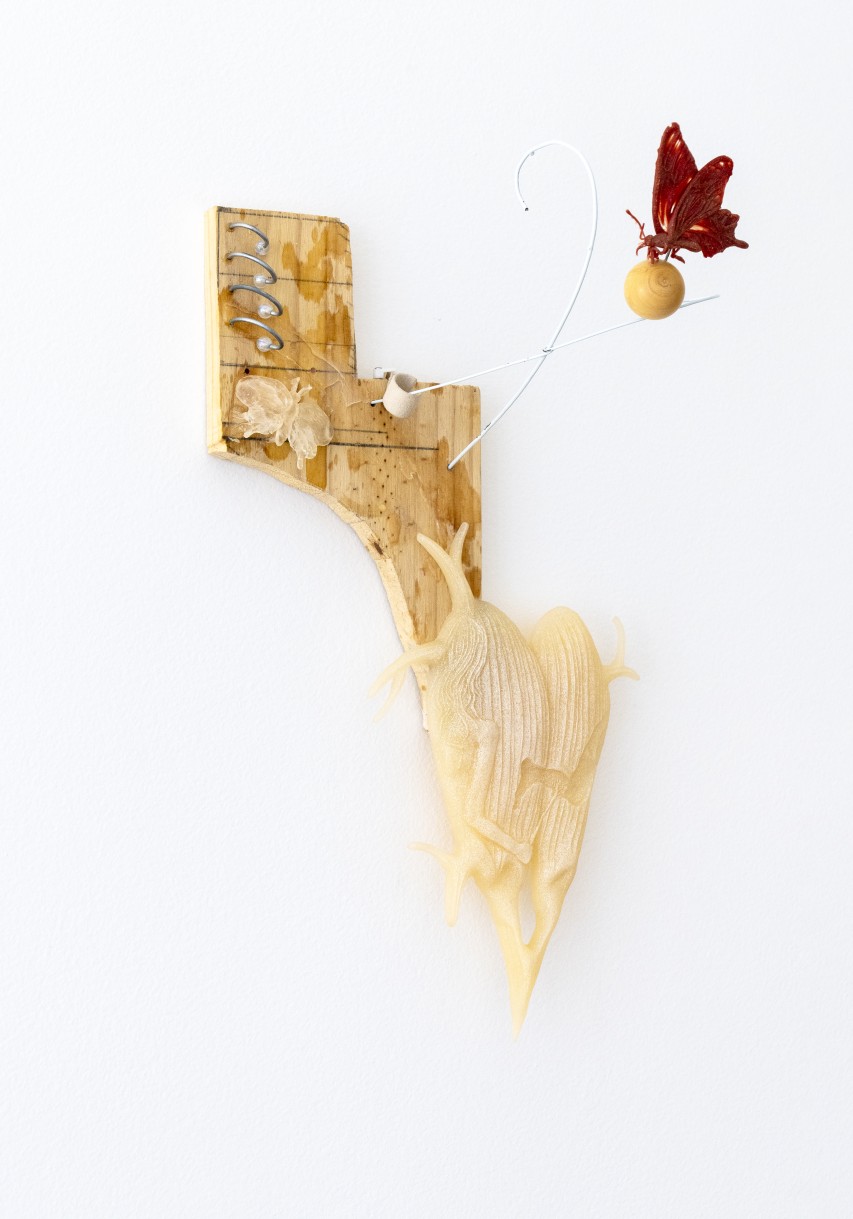
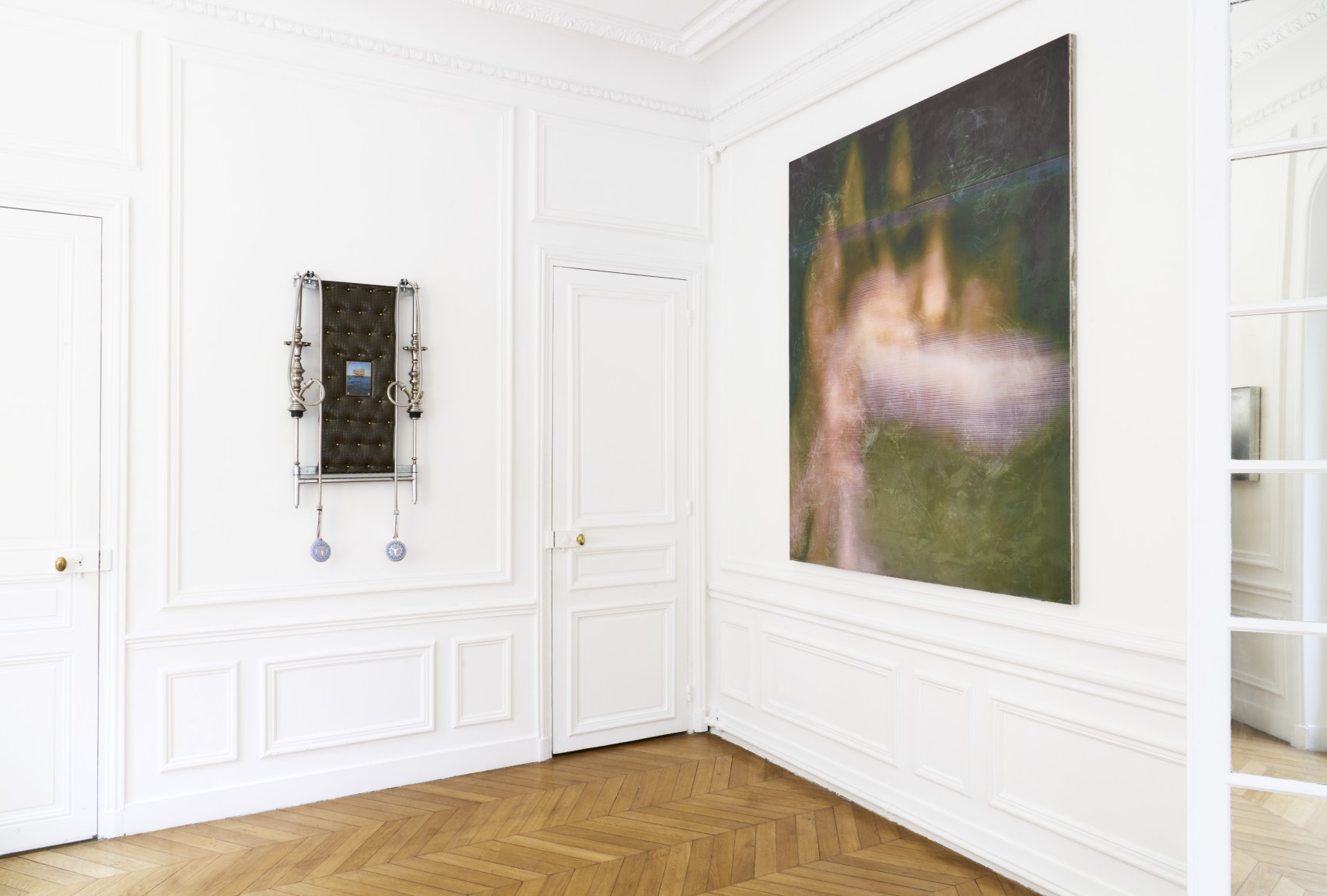
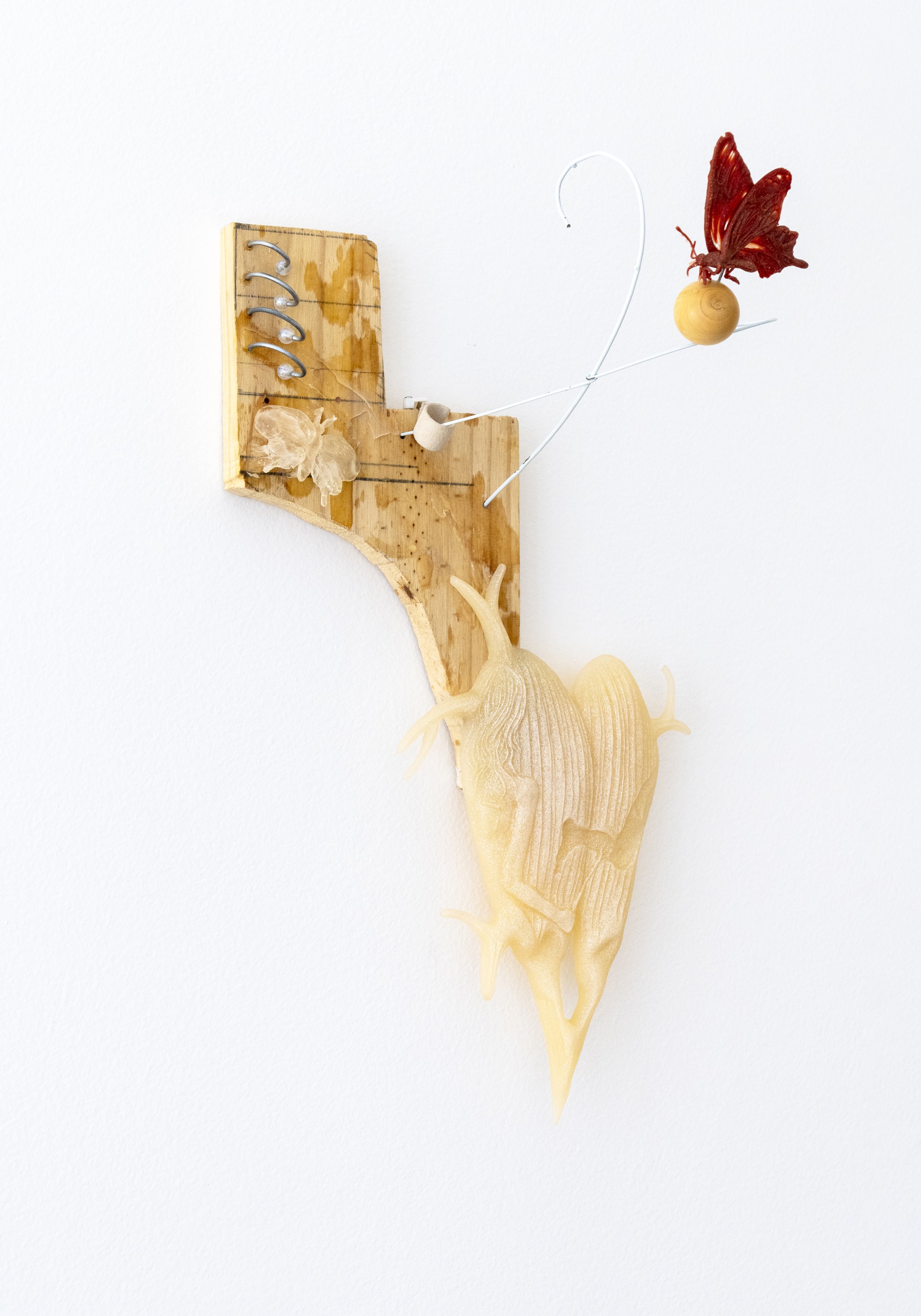
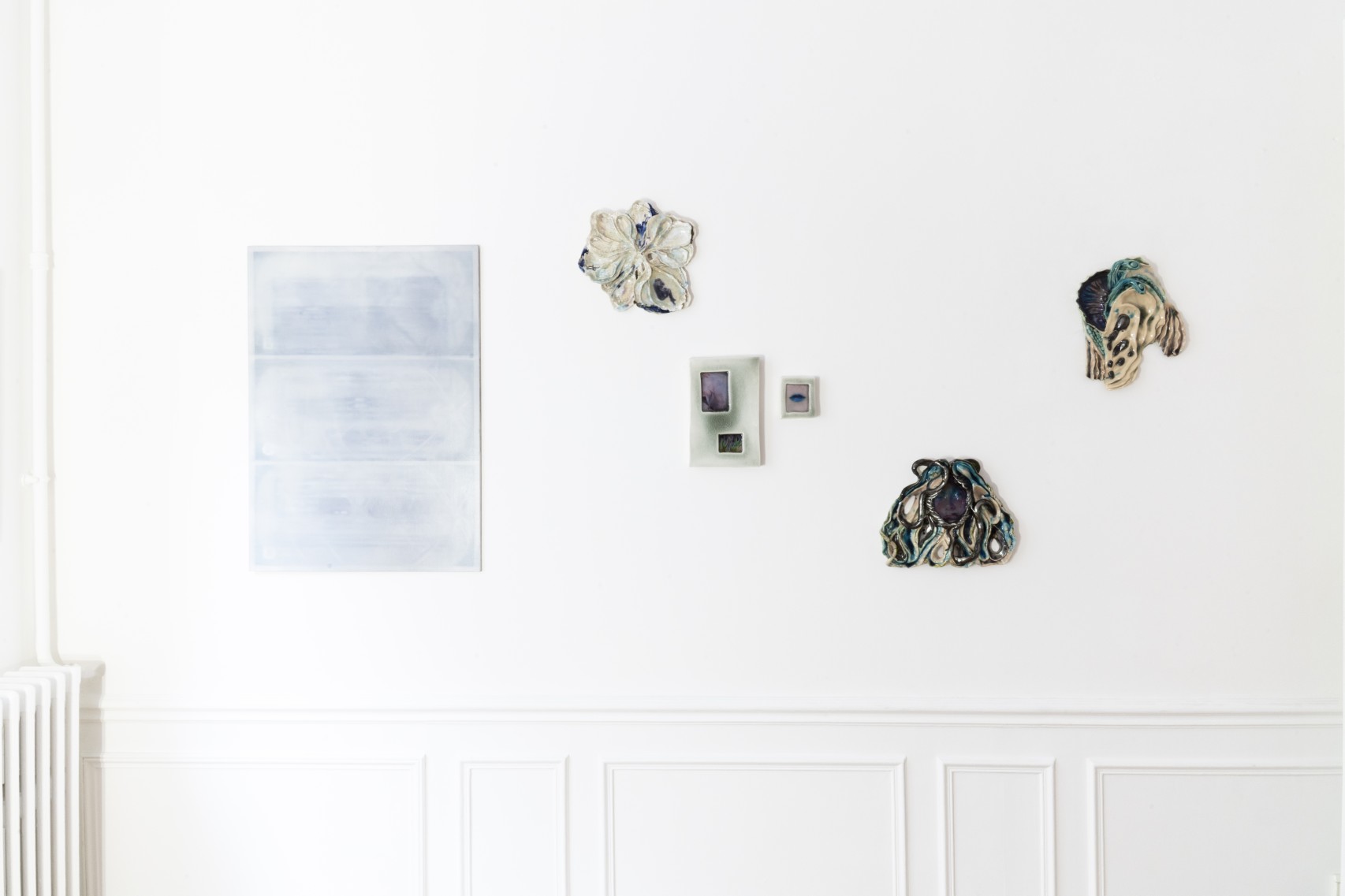
Hyewon Mia Lee welcomes visitors with Pénétration de Psyché vers la vierge Cupidonne, in which the myth is reinvented in the feminine. Her narratives keep resurfacing throughout. We find them again at the heart of the exhibition with A et B and L’araignée de Schrödinger, and on into the final pieces, where Les ongles de mon amour rongés par un rat gathers what remains of Psyche’s story. Materials consume one another, only to be reborn as a shifting body.
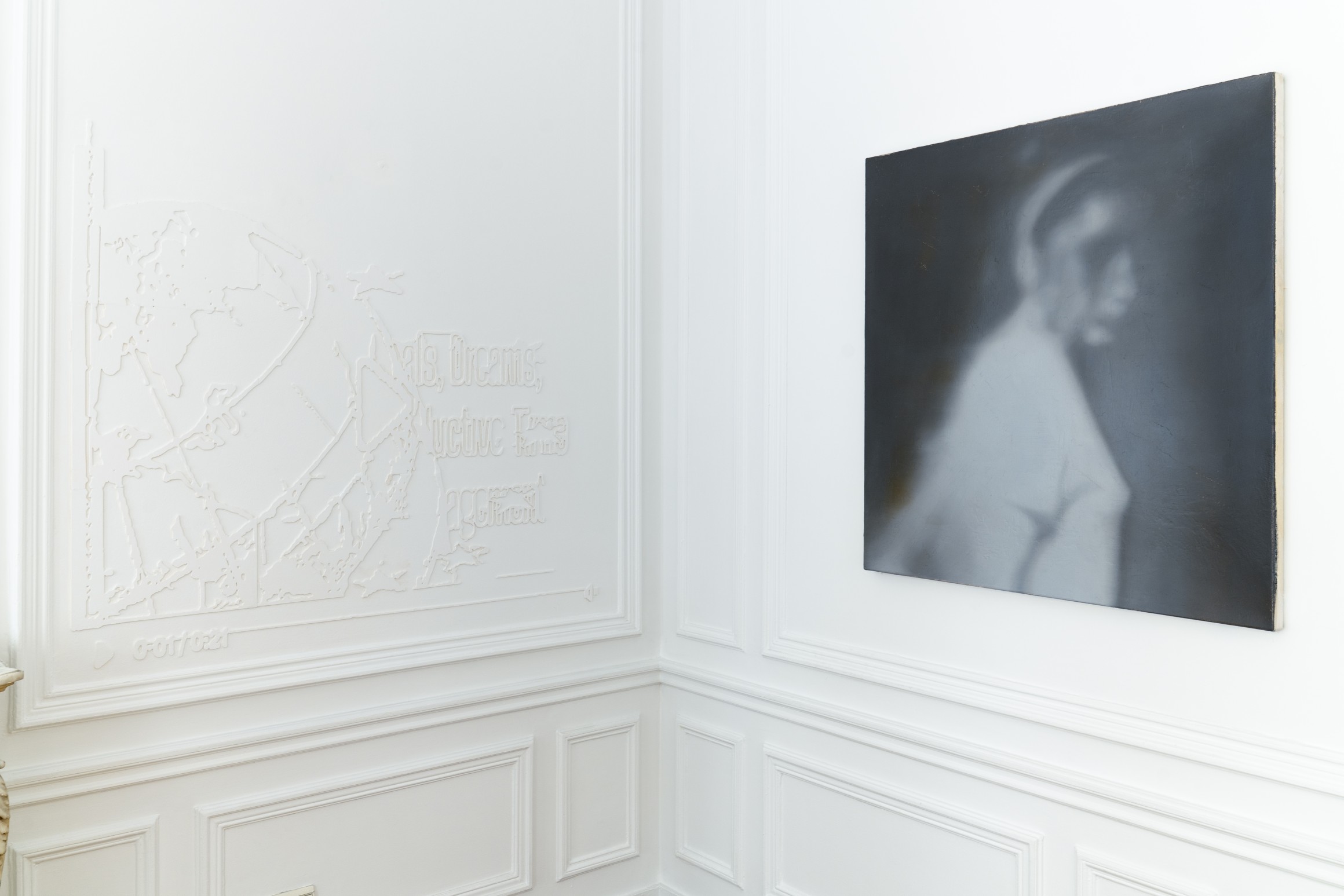
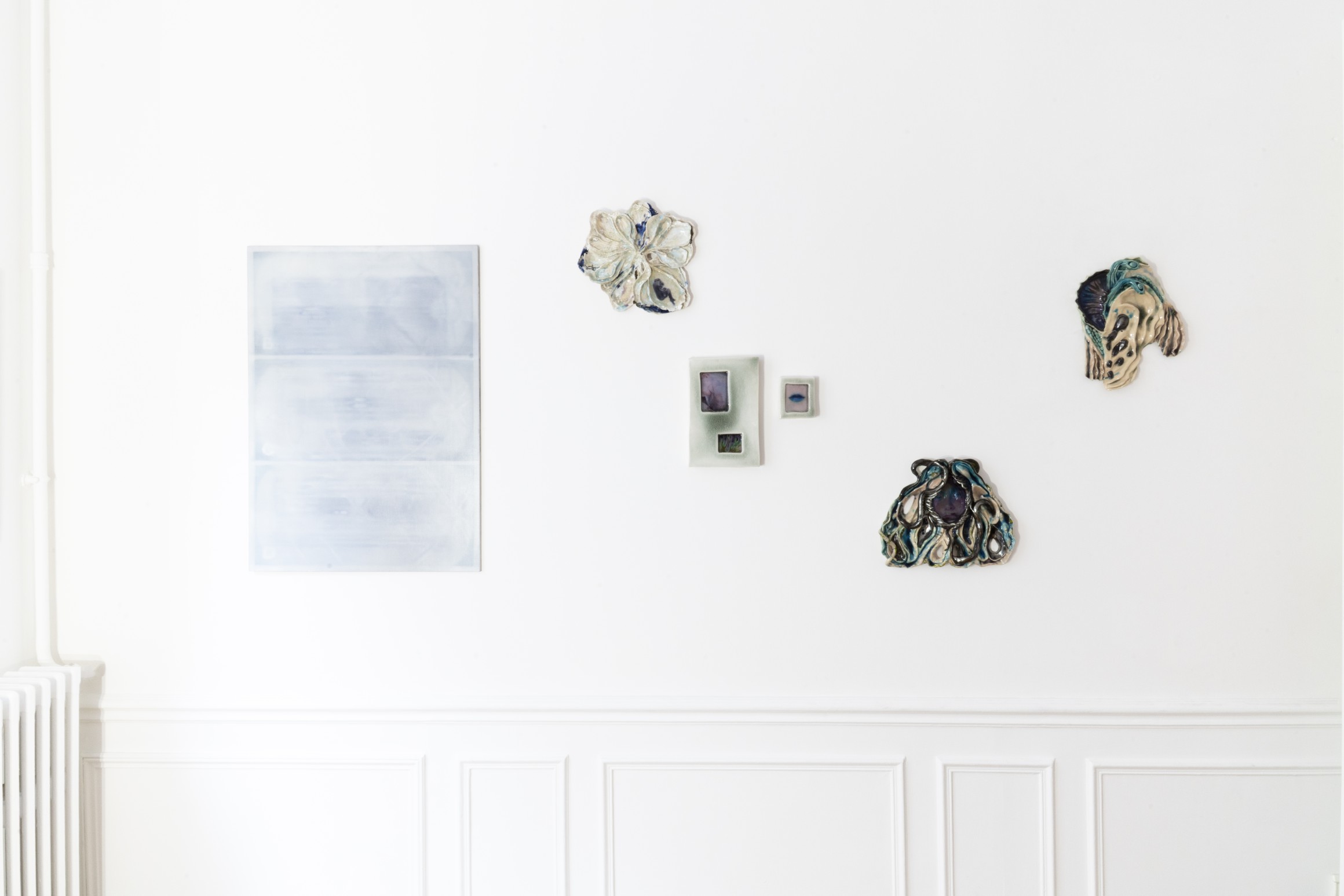
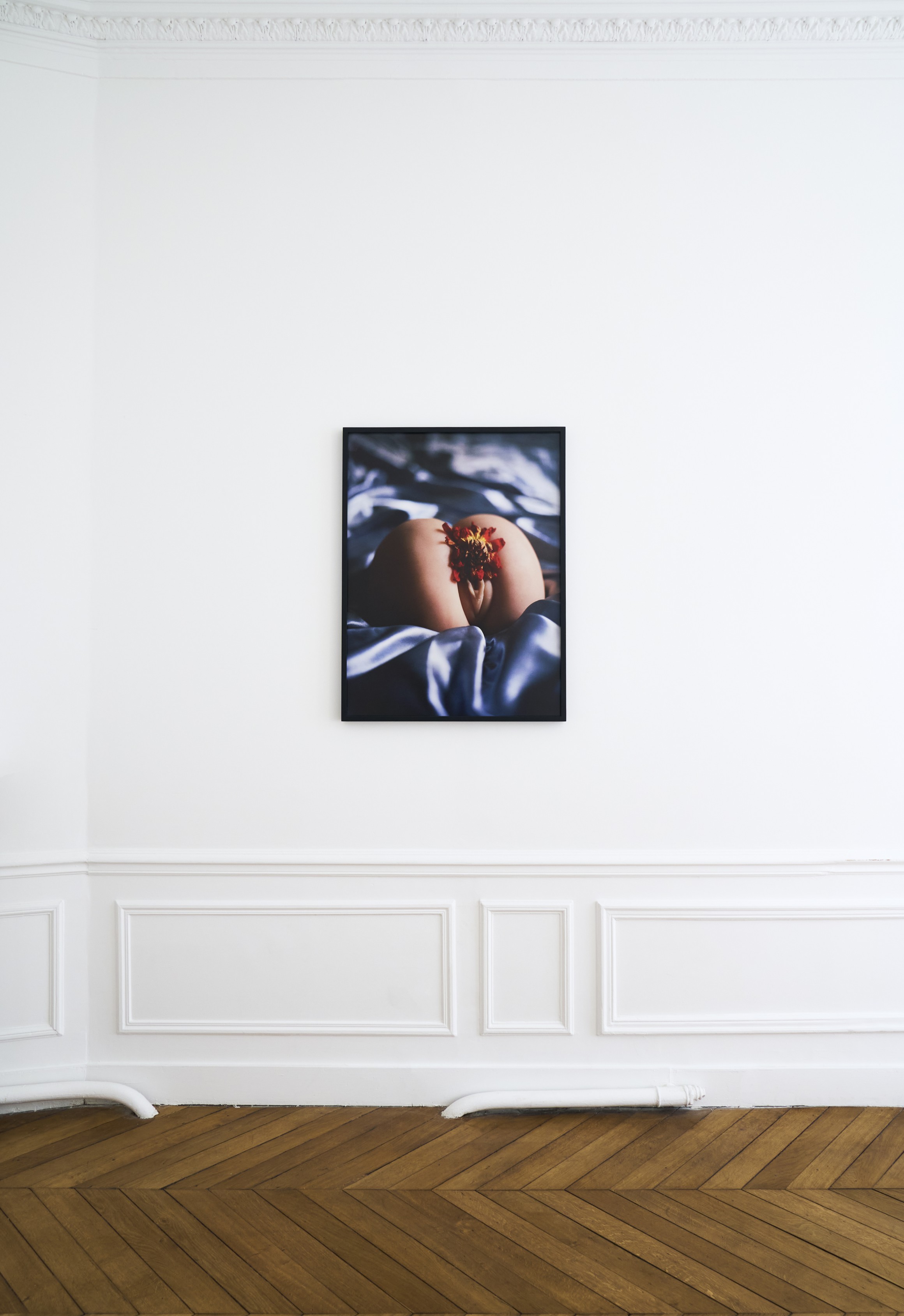
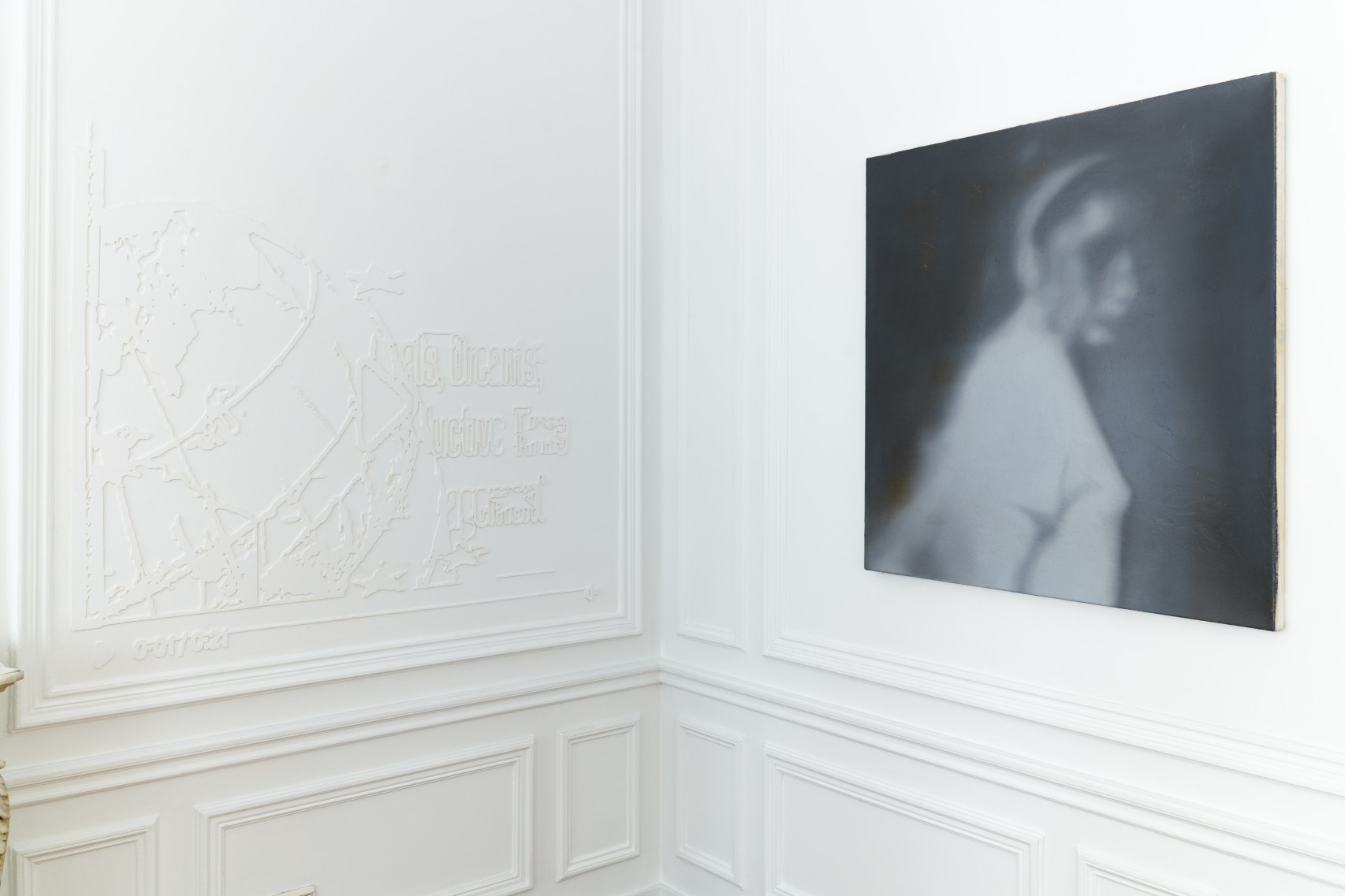
Also at the entrance, Louise Belin’s Attention Map series subverts the tools of computer vision. Where the machine points out what matters and what we should look at, the artist slips in blurred fragments that resist any reading. Further on, Cortisol borrows the ethereal aesthetic of wellness apps, somewhere between self-optimisation and transcendence.
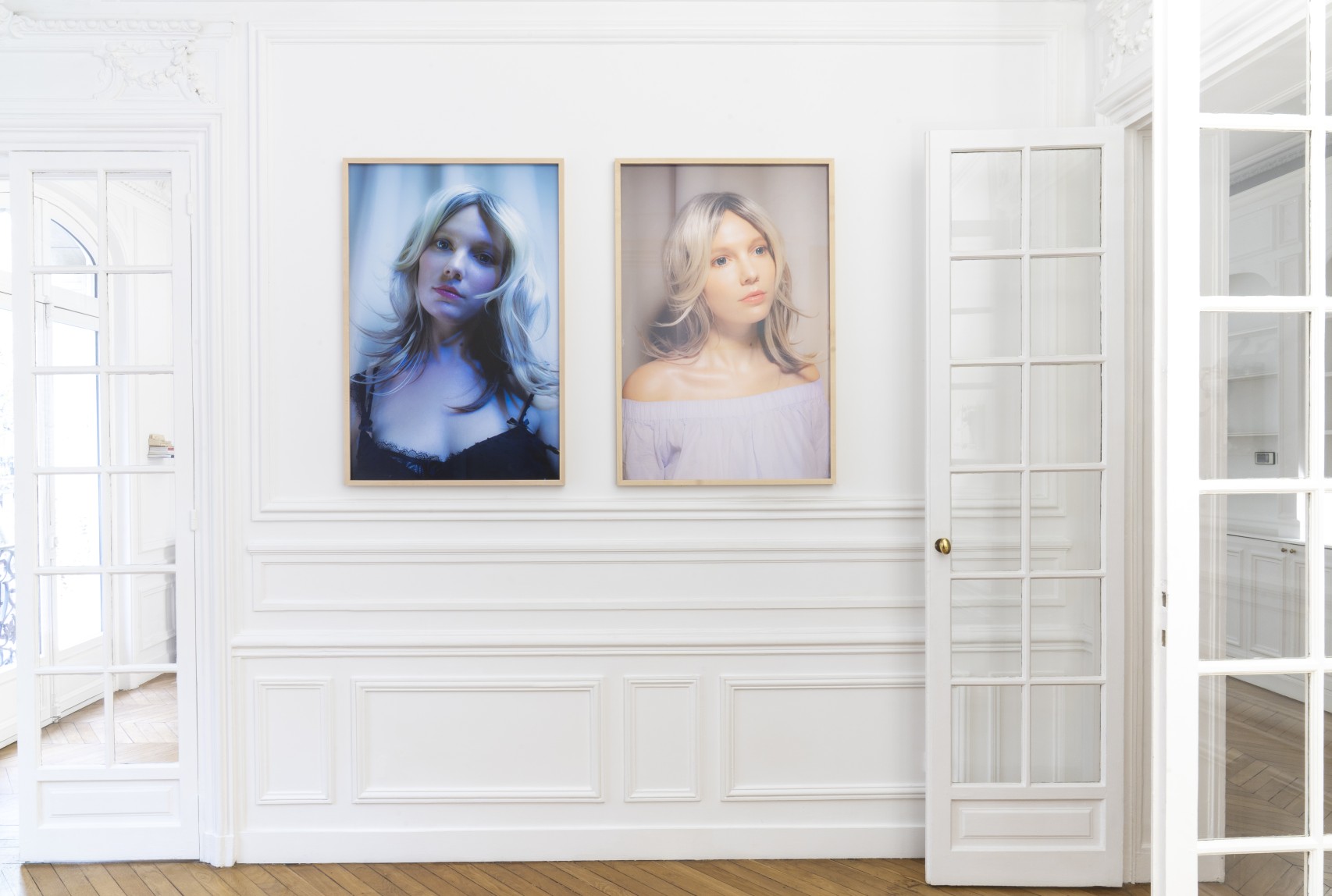
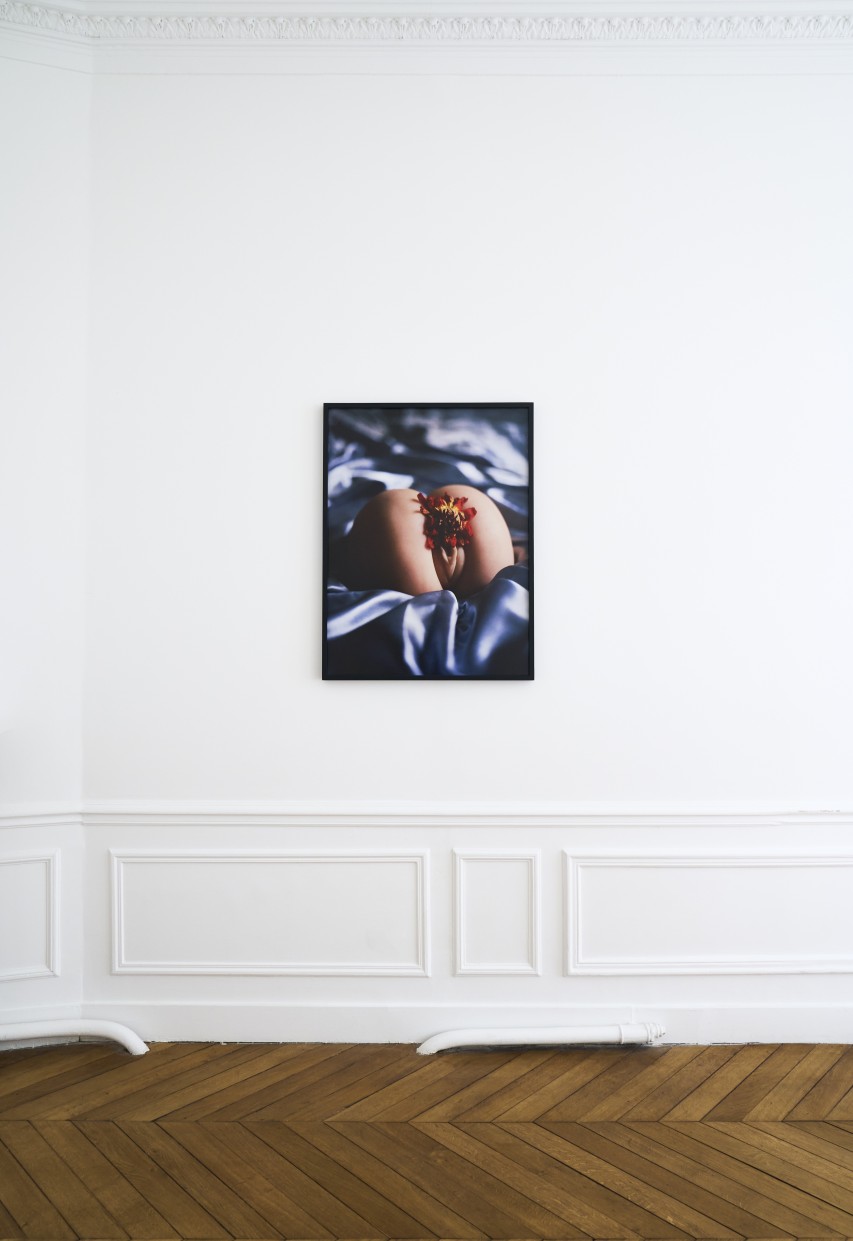
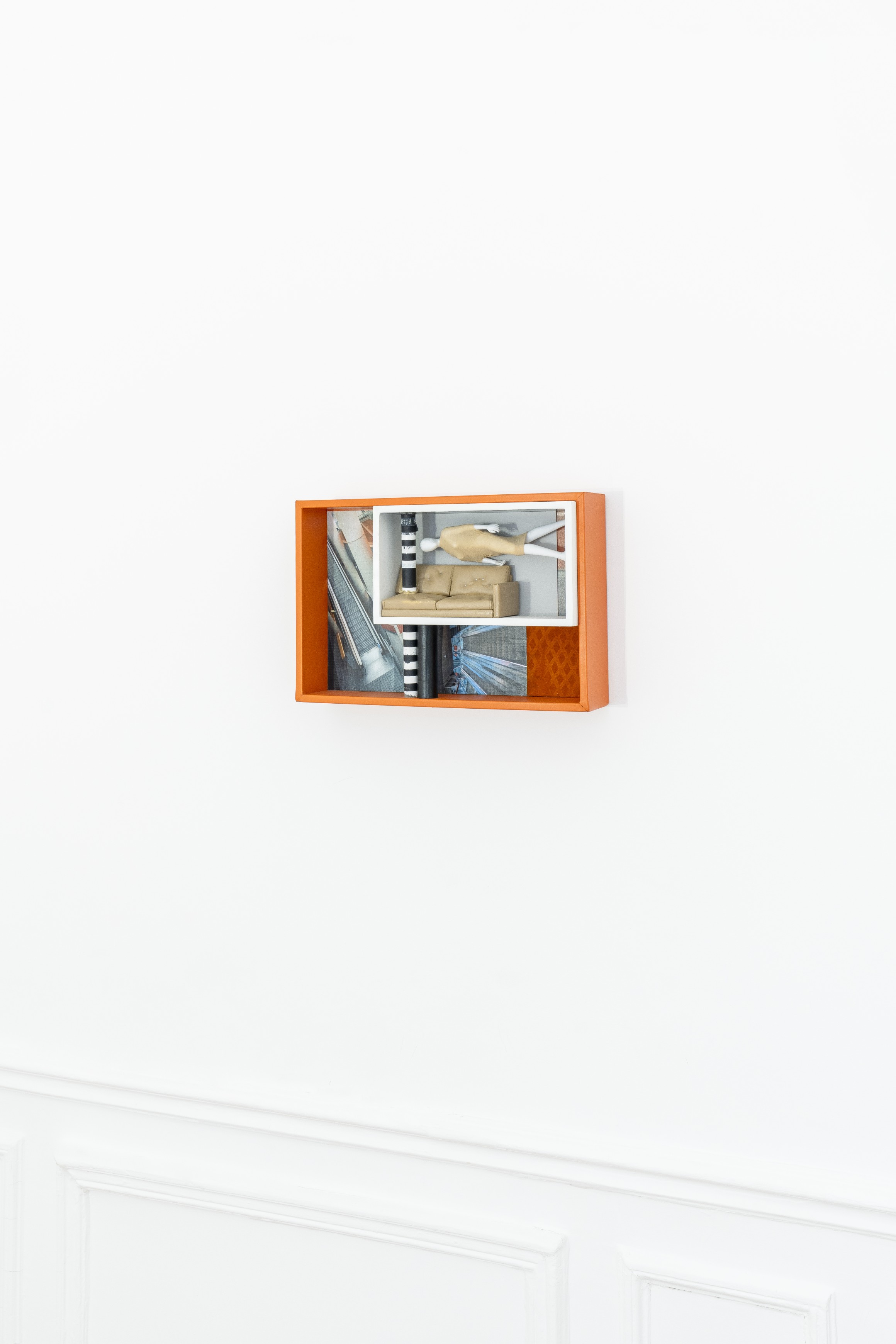
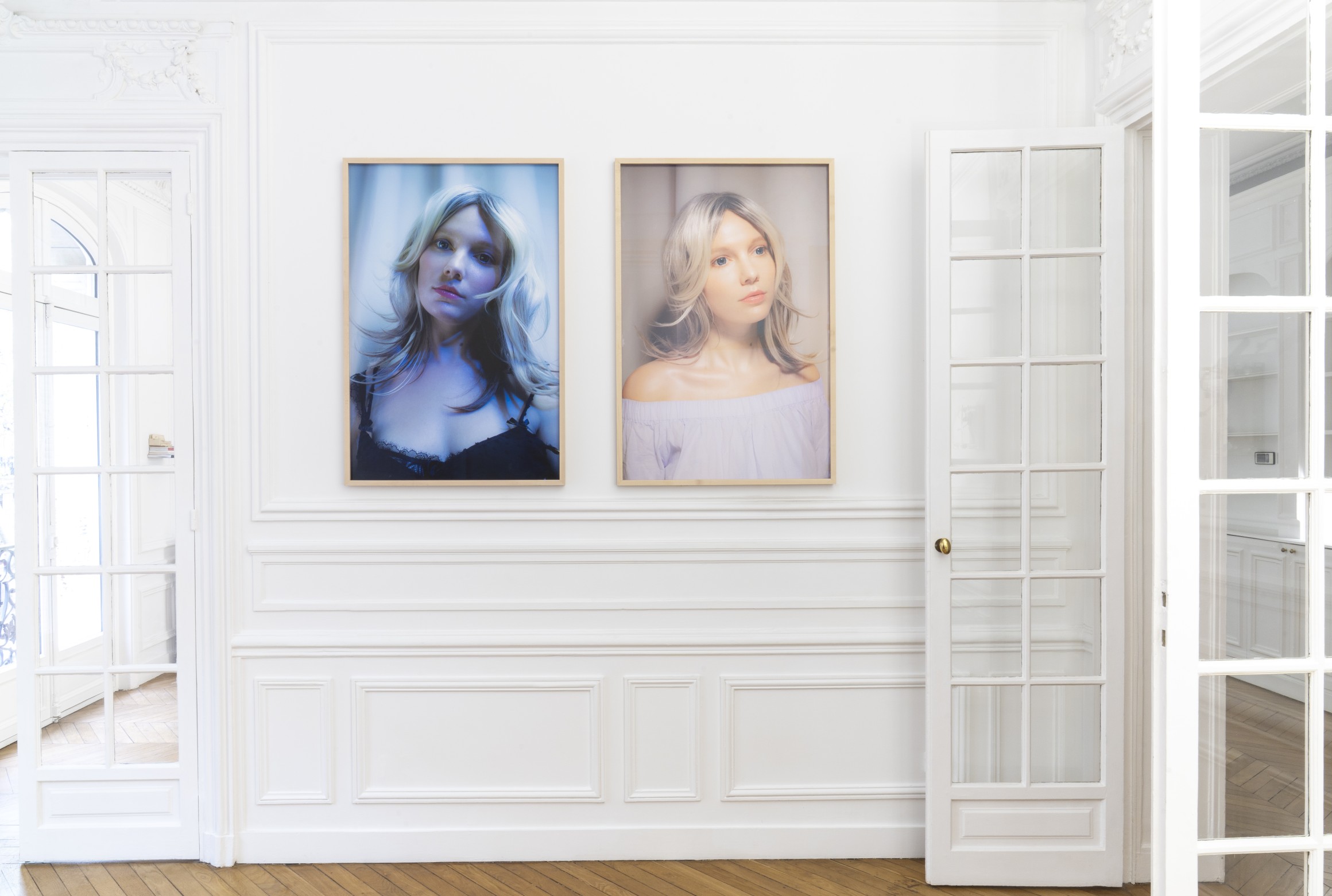
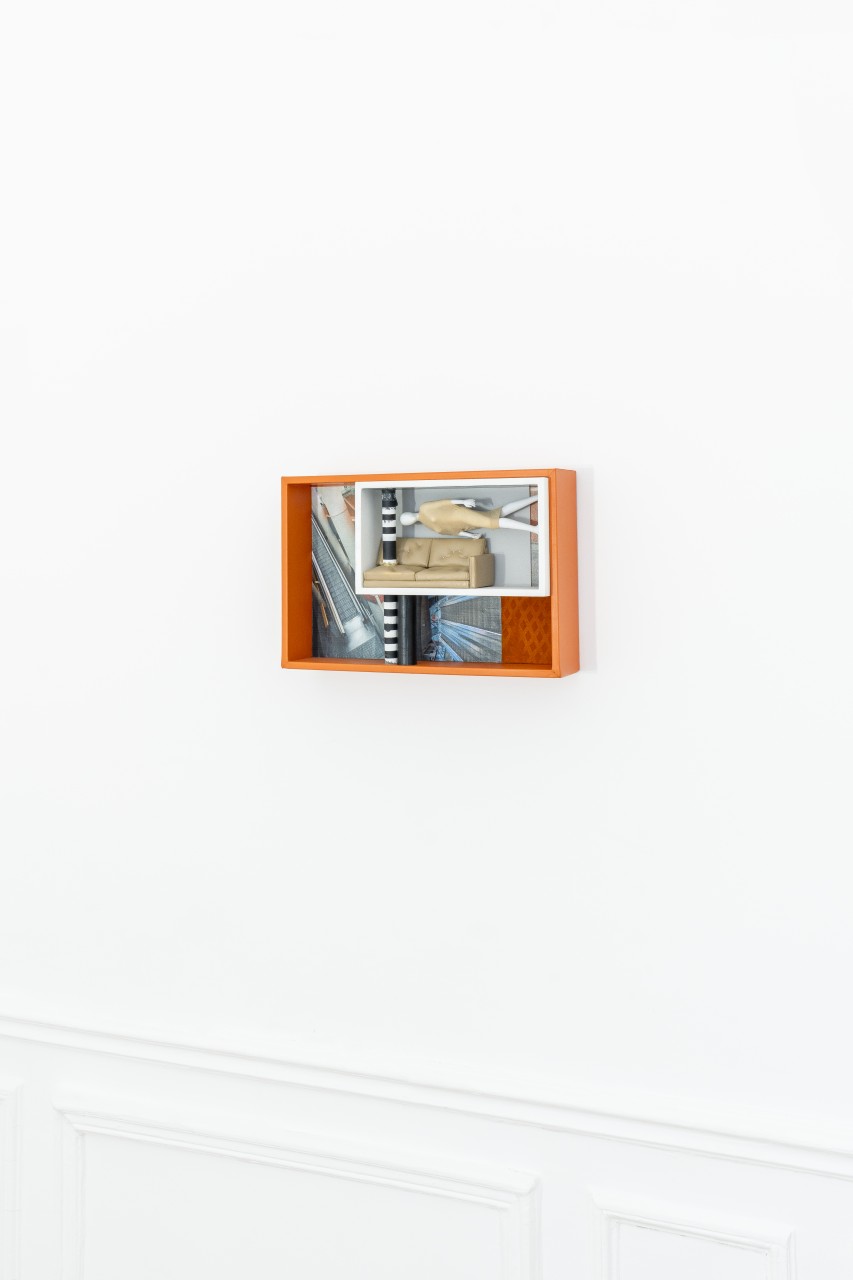
Marilou Poncin, for her part, explores what we project onto female bodies. In What girls are made of, she imagines their insides with irony: glitter and false eyelashes frozen as if in an X-ray. Happy sad faces Cortisol. The work questions the bonds we form with love dolls, those mindless bodies turned life companions.
Apps that promise serenity, dolls that promise love: each of these fictions responds to a lack. They heal as much as they deceive. Therein lies their ambiguity, and perhaps their tenderness. We sense the lie, yet have no wish to let it go.
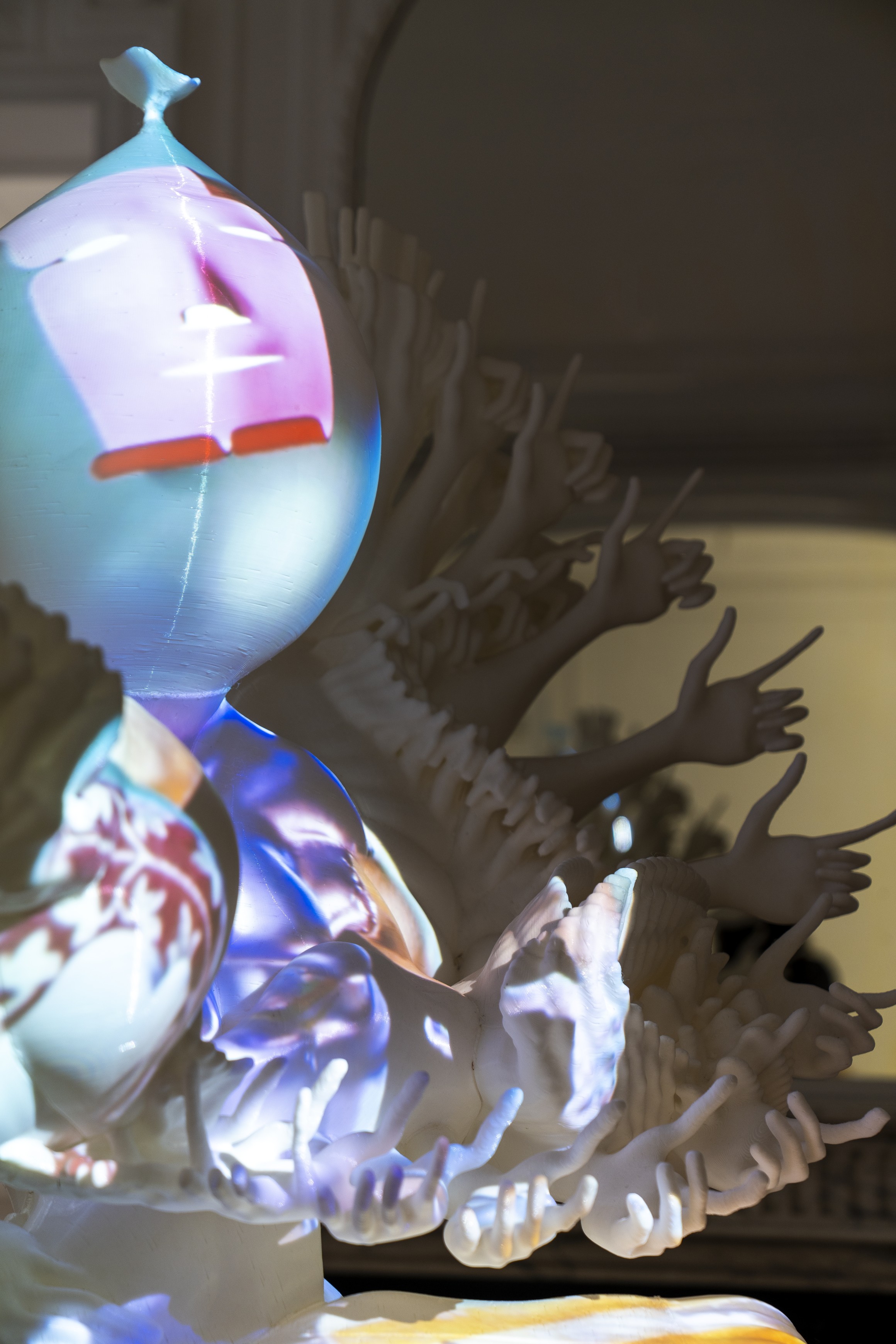
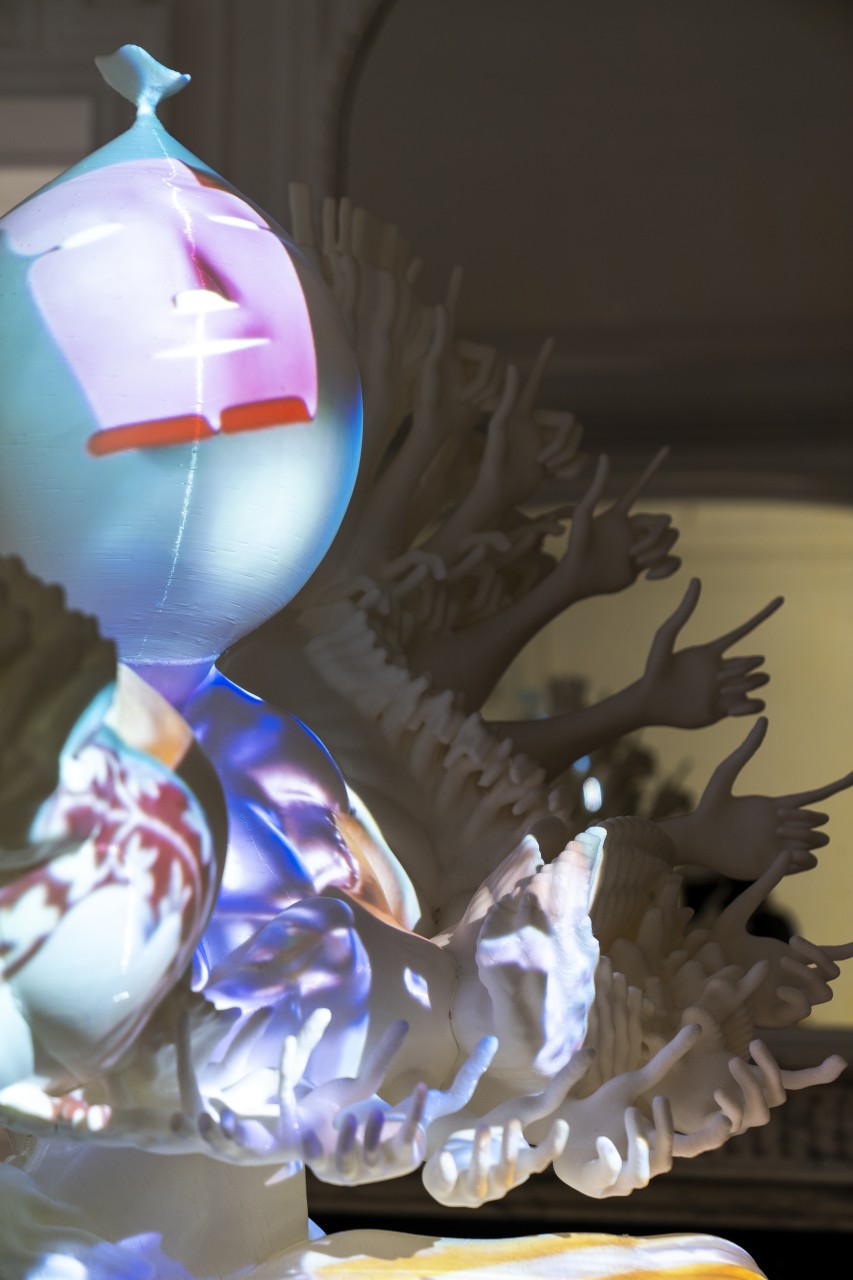
At the heart of the exhibition, Kévin Bray’s The One That Tails becomes the narrator of this story. Inspired by the trickster, the figure tells the fable of “One”, seduced by a digital world promising limitless freedom. The danger lies not in entering it, but in believing one can leave without leaving something behind.
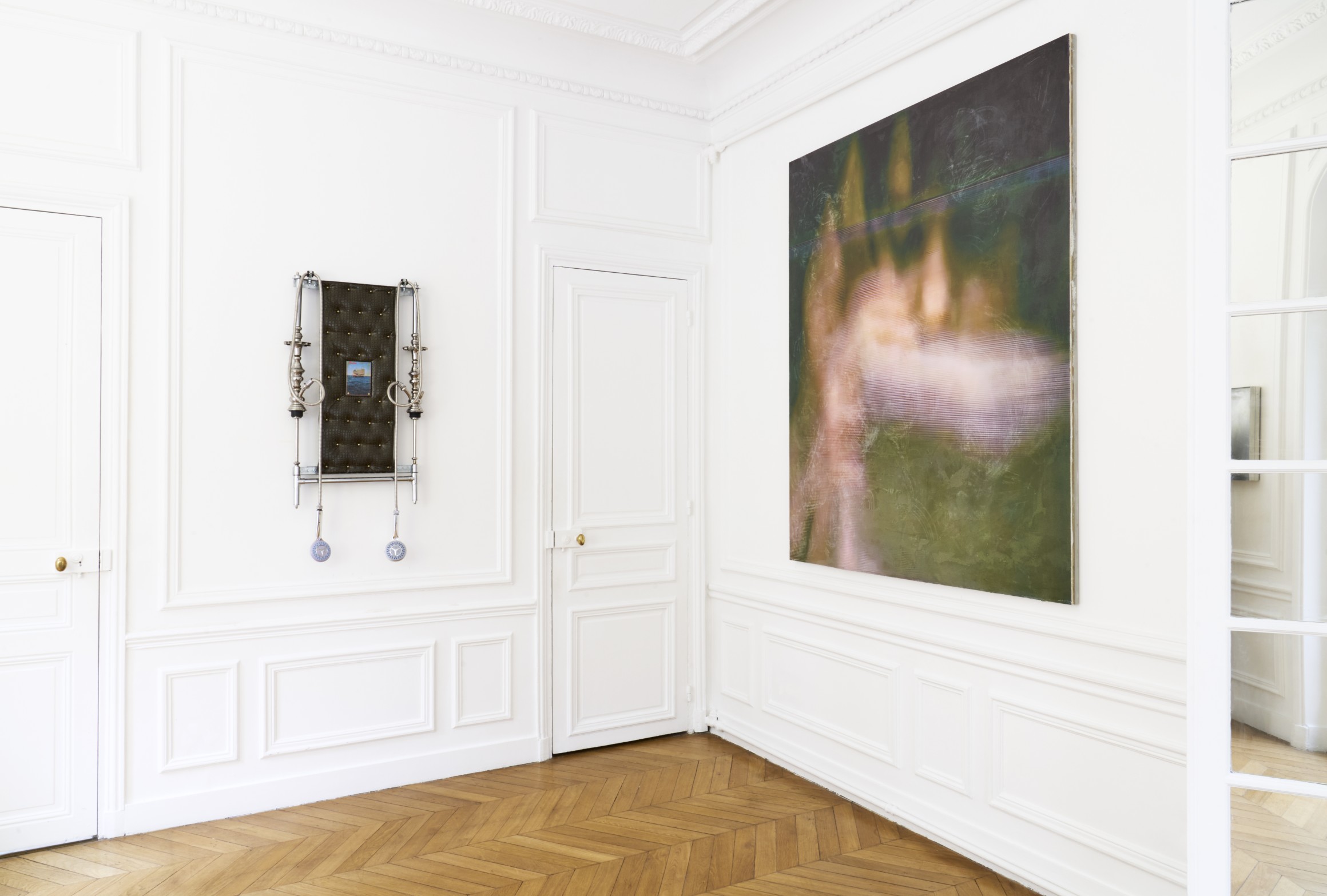
Around it, Jack Warne combines painting, photography and augmented reality in an image that refuses to stay still. Loucia Carlier’s post-apocalyptic landscapes lay a second skin over the world, one that exposes its inflammations as much as it blends them into the complexion.
Here, surface is never superficial. It protects, masks, holds back. What we cover up does not disappear: it moves, changes shape, and waits to be seen differently.
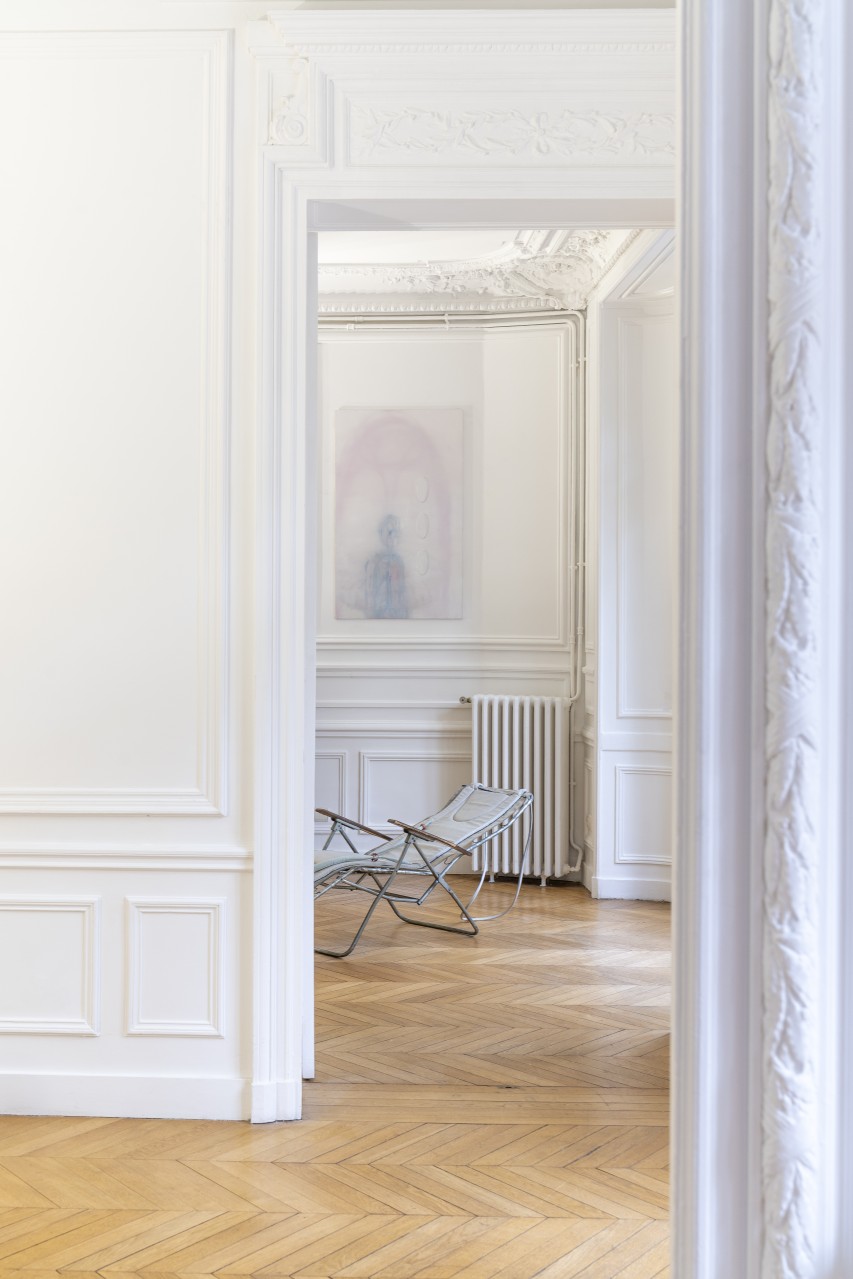
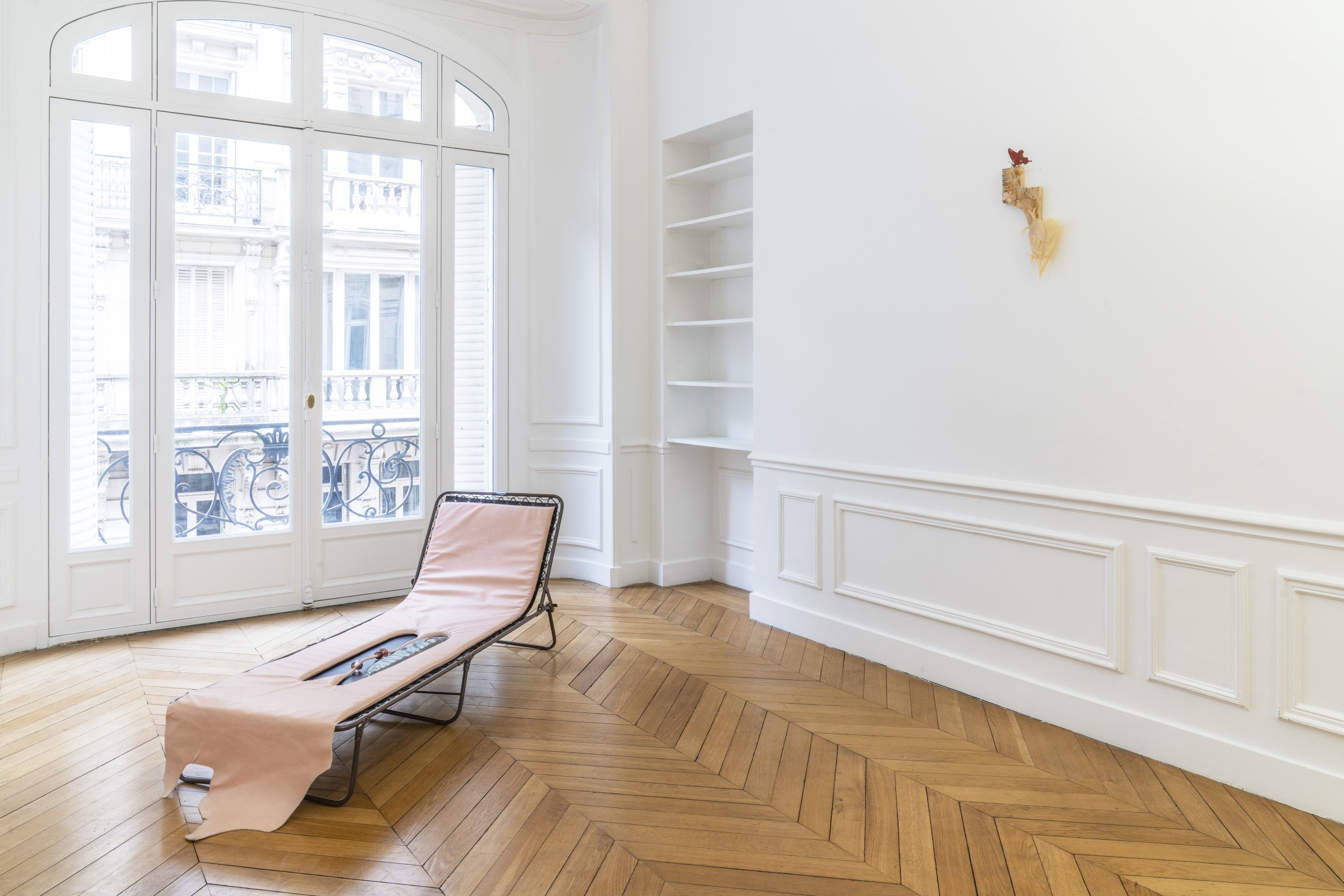
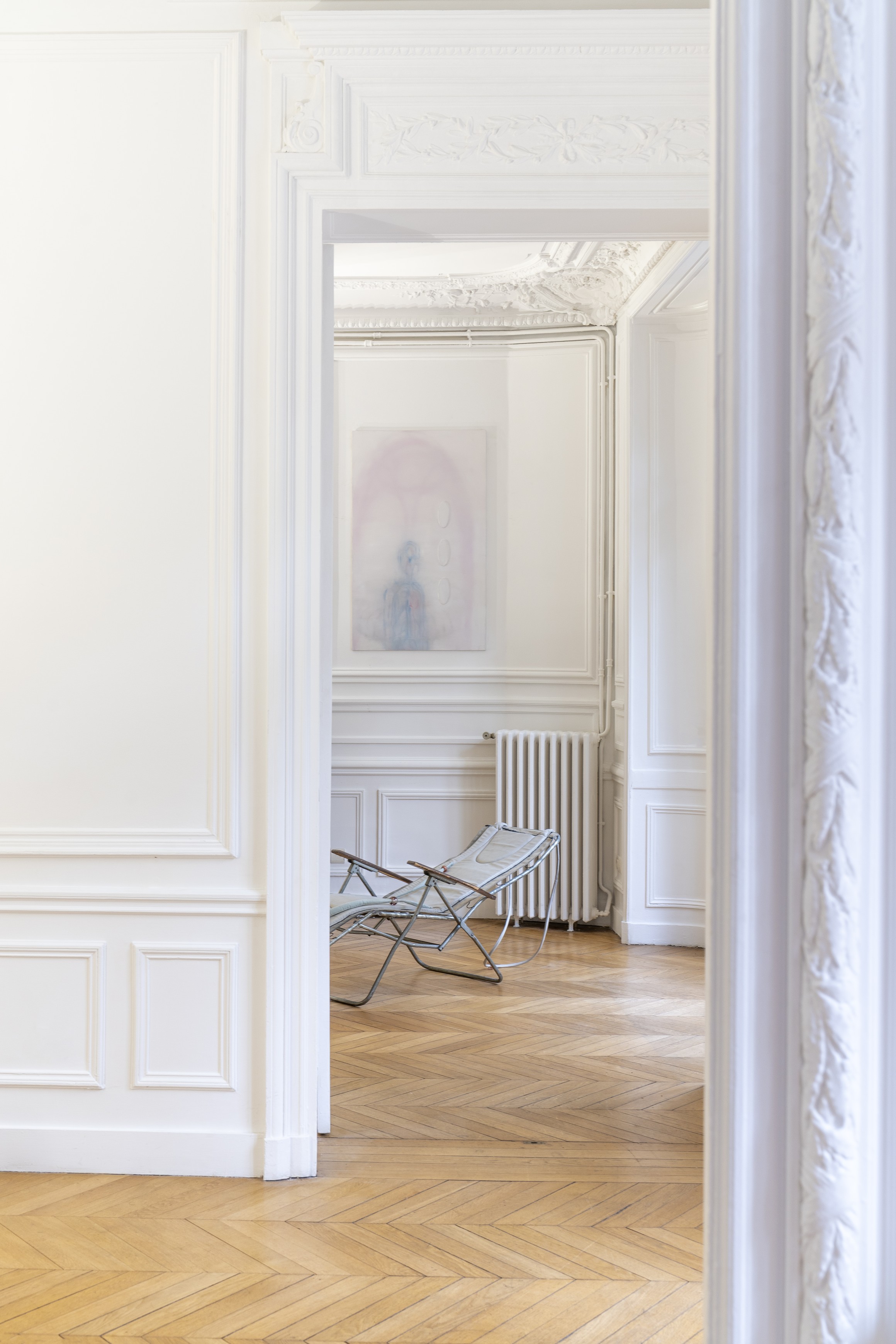
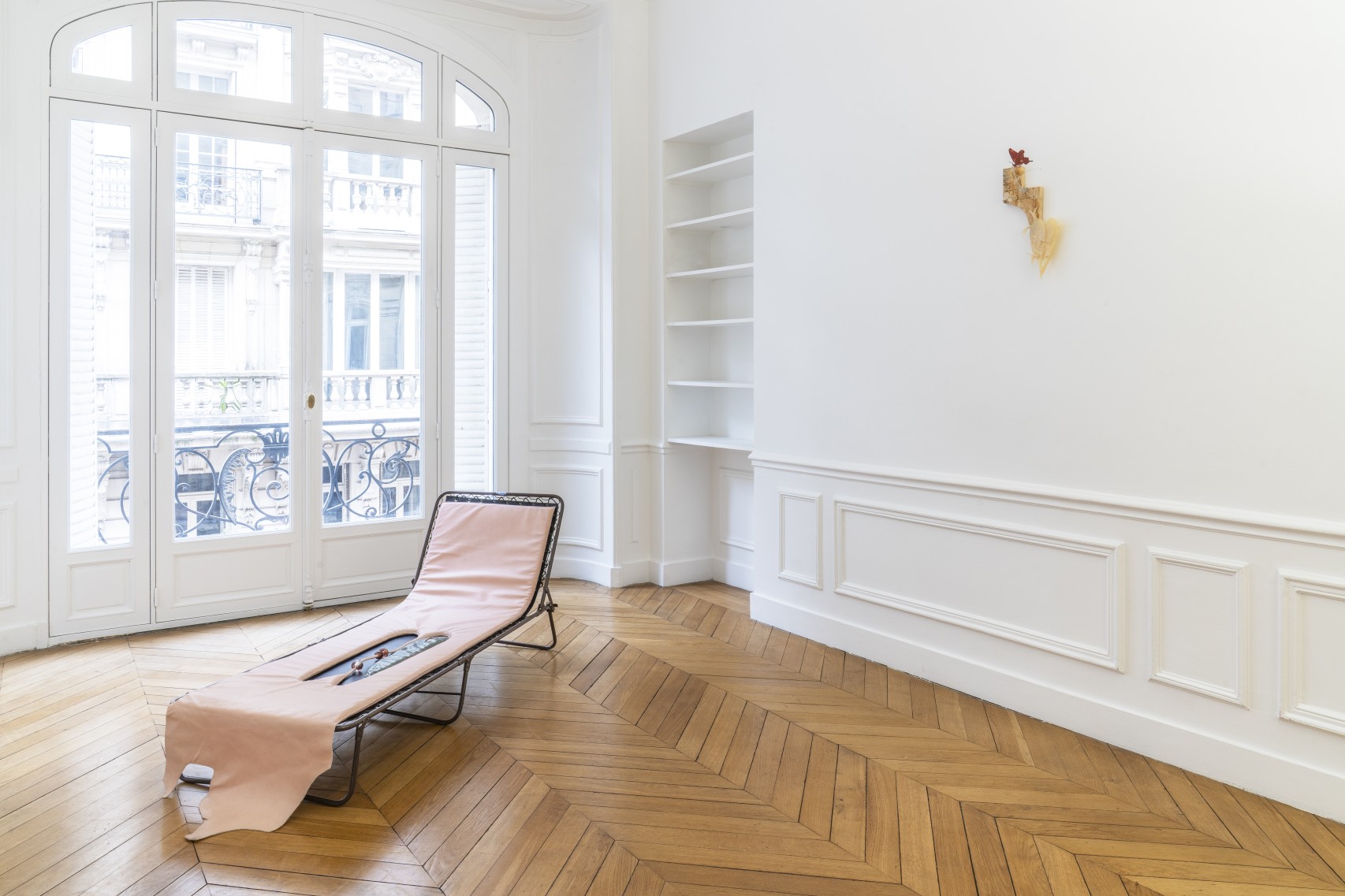
Along the way, visitors encounter ‘Io Burgard’s deckchairs. Reworked in leather, they sprout organic growths. They promise a rest they never grant.
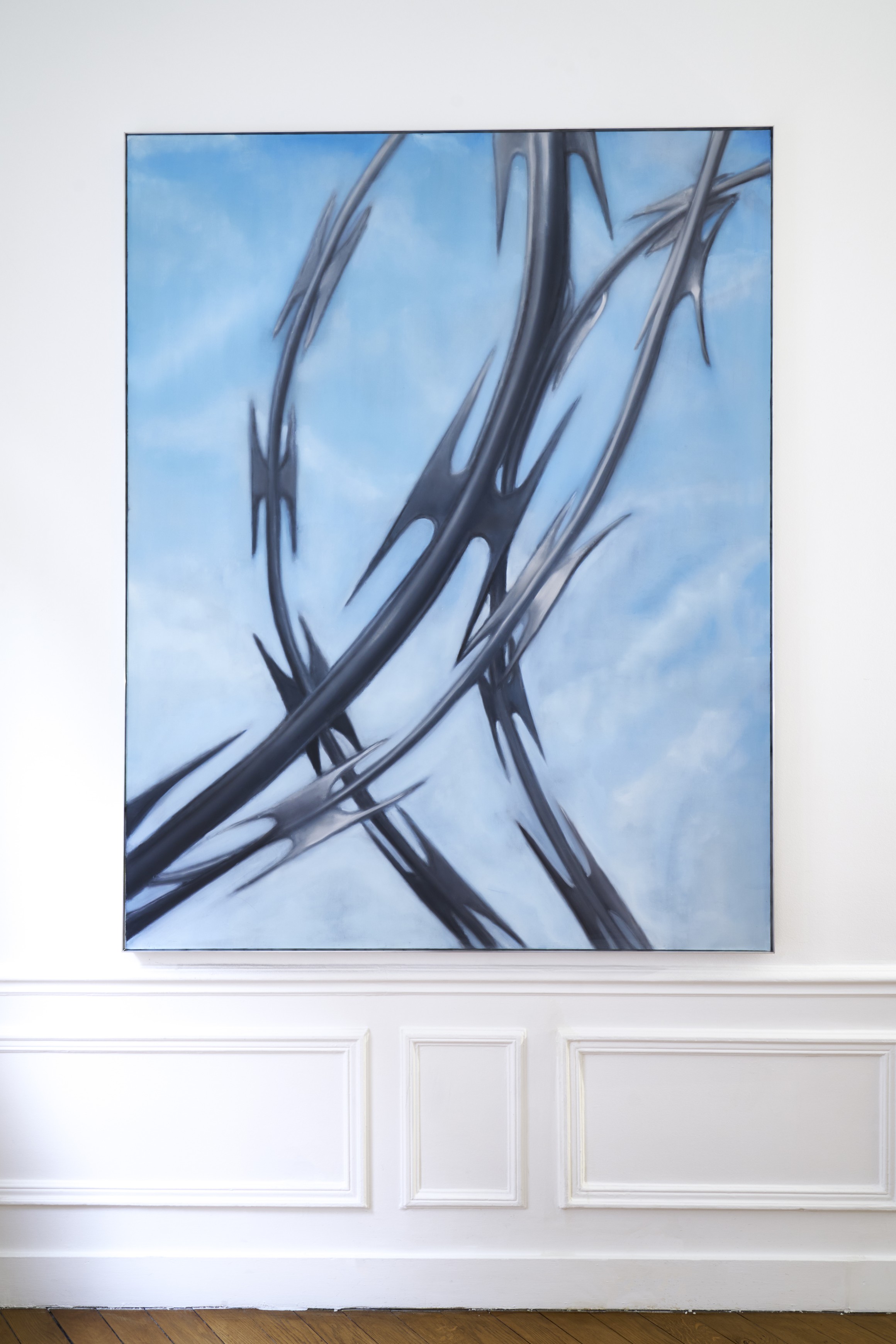
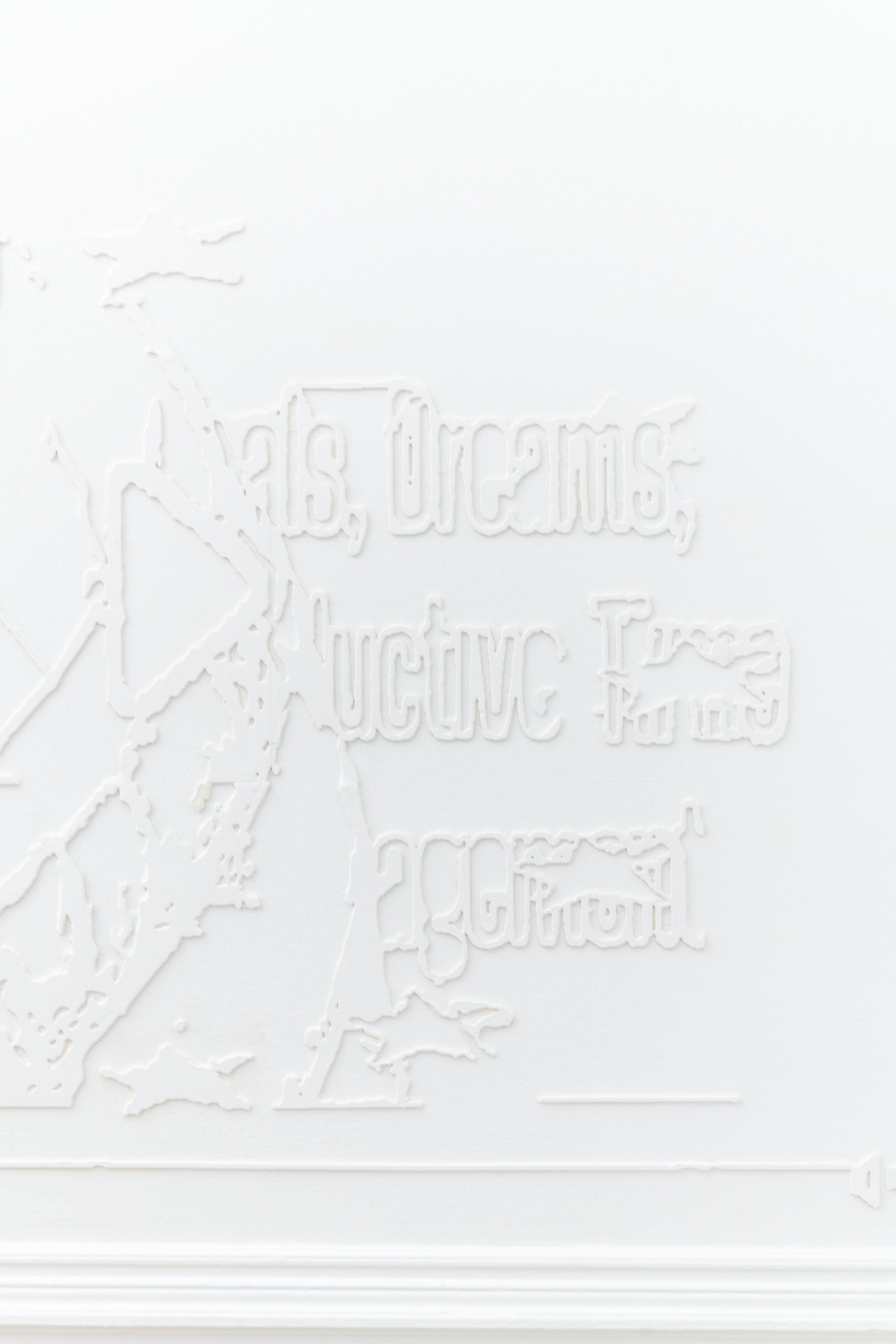
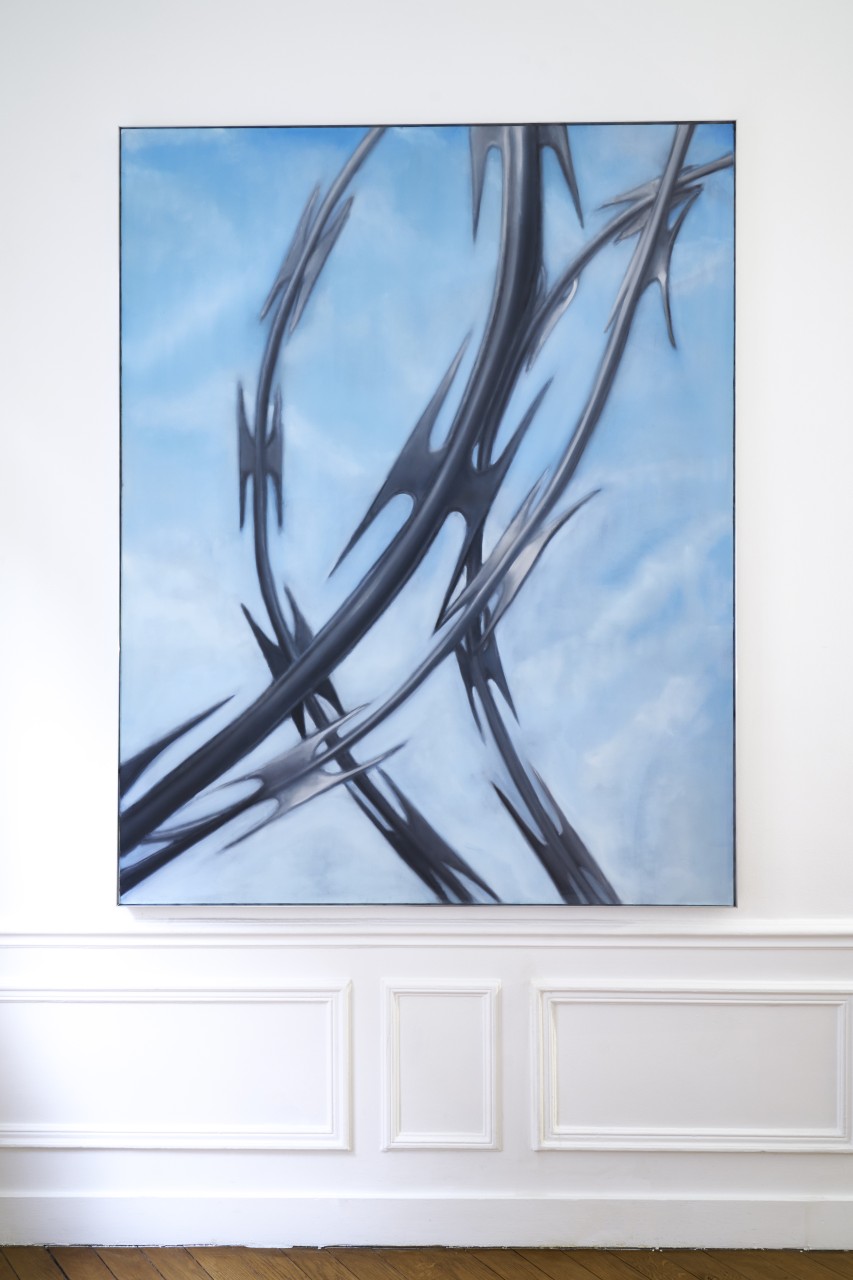
With Dubai Dreams, Aaron Roth conjures up a postcard paradise, kitsch and out of reach. His barbed wire, meanwhile, has neither beginning nor end: it spills beyond the frame and encloses us, without telling us where the fence stops.
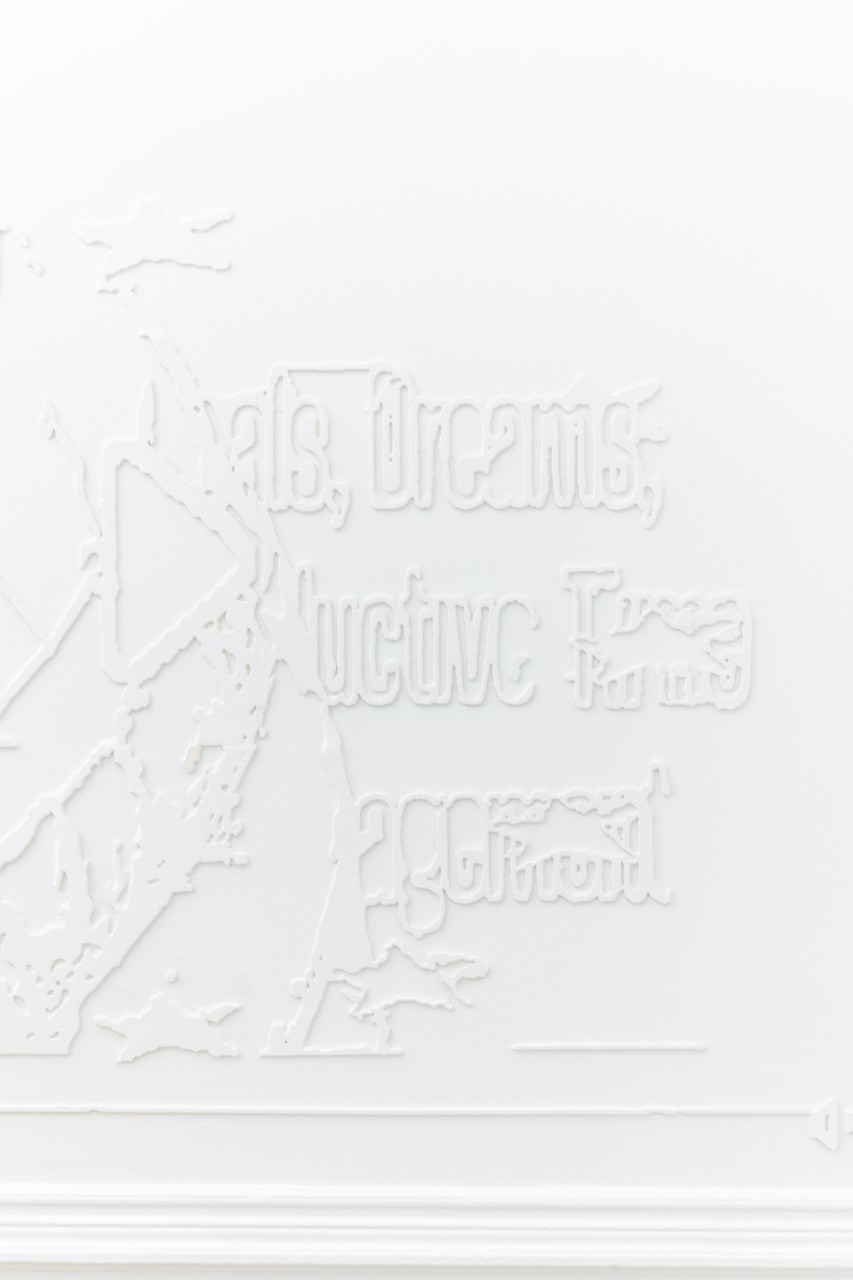
Every dream of elsewhere has its fences. Rest, luxury and escape present themselves as ways out, but they are often mere sets. We enter them the way we fall asleep, without knowing where the awakening lies hidden.
To finish, an invitation: Welcome to my room. Marilou Poncin opens the door to two cam girls’ bedrooms, somewhere between confessions and virtual fantasies. It is an exit that is not one: we leave the exhibition by stepping into someone’s home.
Like the white lies that give the exhibition its title, make-believe here is never mere deception. It is a strategy, almost a form of tenderness: to blur, to transform, to tell things differently. A soft blanket thrown over reality, just long enough for us to inhabit it. White Lies thus approaches fiction as a form of rescue. Not as a way of withdrawing from the world, but of crafting, in its interstices, other ways of looking at it. And perhaps of continuing to believe in it.
-Sacha Guedj-Cohen